Denim Is Not Just a Fabric
A Technical Guide to Denim Sourcing, Development and Production

Denim is one of the most complex and technically sensitive categories in apparel. While it is often perceived as a basic product, its development requires a deep understanding of fabric construction, dyeing behavior and industrial washing processes.
Unlike many other woven categories, denim is not developed in separate stages. Fabric, garment construction and washing are closely interconnected. A decision taken at yarn or fabric level will directly influence wash results, fit stability and bulk consistency.
This is exactly where many products fail, not in design, but in execution.
Fabric Construction and Material Behavior
At its core, denim is a warp-faced twill construction, most commonly 3x1, where indigo-dyed warp yarns dominate the surface while undyed weft yarns remain visible on the inside. This structure allows denim to fade over time and develop contrast.
While 3x1 twill remains the standard for most denim products, 2x1 constructions are used in lighter fabrics to create a softer handfeel and a flatter surface, particularly for black or fashion-oriented denim.
Fabric weight, measured in ounces per square yard, defines how the product behaves throughout development. Lightweight fabrics between 8 and 10 oz require careful handling during sewing to avoid distortion, while mid-weights between 11 and 13 oz offer the best balance for durability and wash performance. Heavier constructions above that create rigidity but also increase shrinkage risk and production complexity.
Surface character is further influenced by yarn choice. Ring-spun yarns create irregular textures and more authentic aging, while open-end yarns result in a cleaner appearance. In premium denim, slubby yarns are often used to introduce controlled irregularities, creating a more dynamic surface over time.
Blended constructions are now fully established in denim. Cotton remains dominant, but fibers such as Tencel, as well as dual-core stretch yarns, are widely used to enhance comfort, softness and recovery. This is no longer limited to lightweight products but increasingly part of modern denim development.
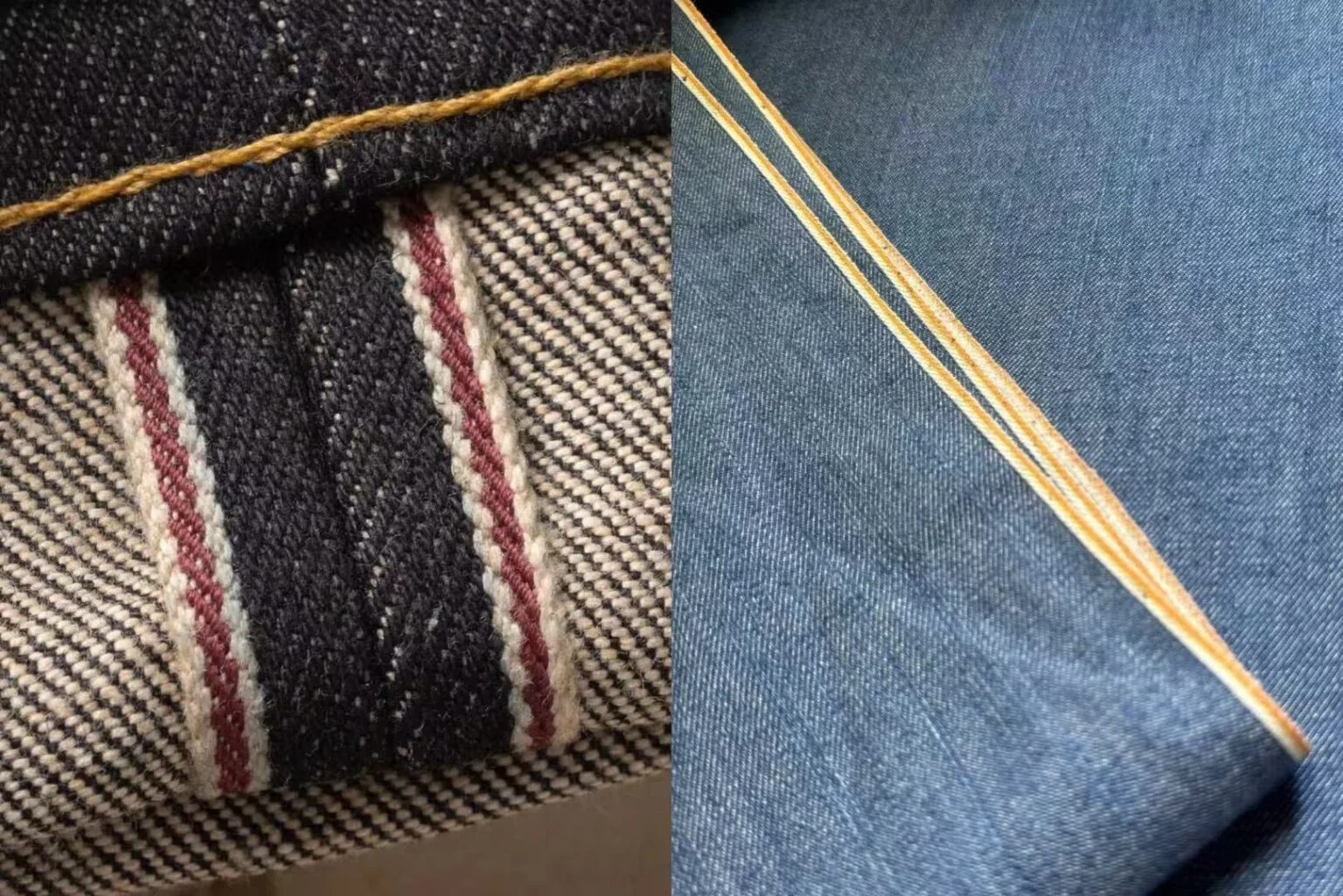
Selvedge denim, woven on shuttle looms, represents another level of craftsmanship. While not always commercially scalable, it remains relevant for premium positioning and heritage-inspired products.
Pre-Treatment Processes Define the Outcome
Before dyeing and garment construction, denim fabrics undergo a series of preparation steps that define how the material will perform later.
Singeing removes loose surface fibers, desizing eliminates starch-based sizing agents and scouring removes natural impurities such as waxes and oils. These steps are essential to ensure consistent dyeing and predictable washing results.
Mercerization improves strength and dye affinity, while sanforization stabilizes the fabric and controls shrinkage.
These processes are rarely visible, but they determine whether a product performs consistently in bulk or not.
Dyeing Techniques and Color Depth
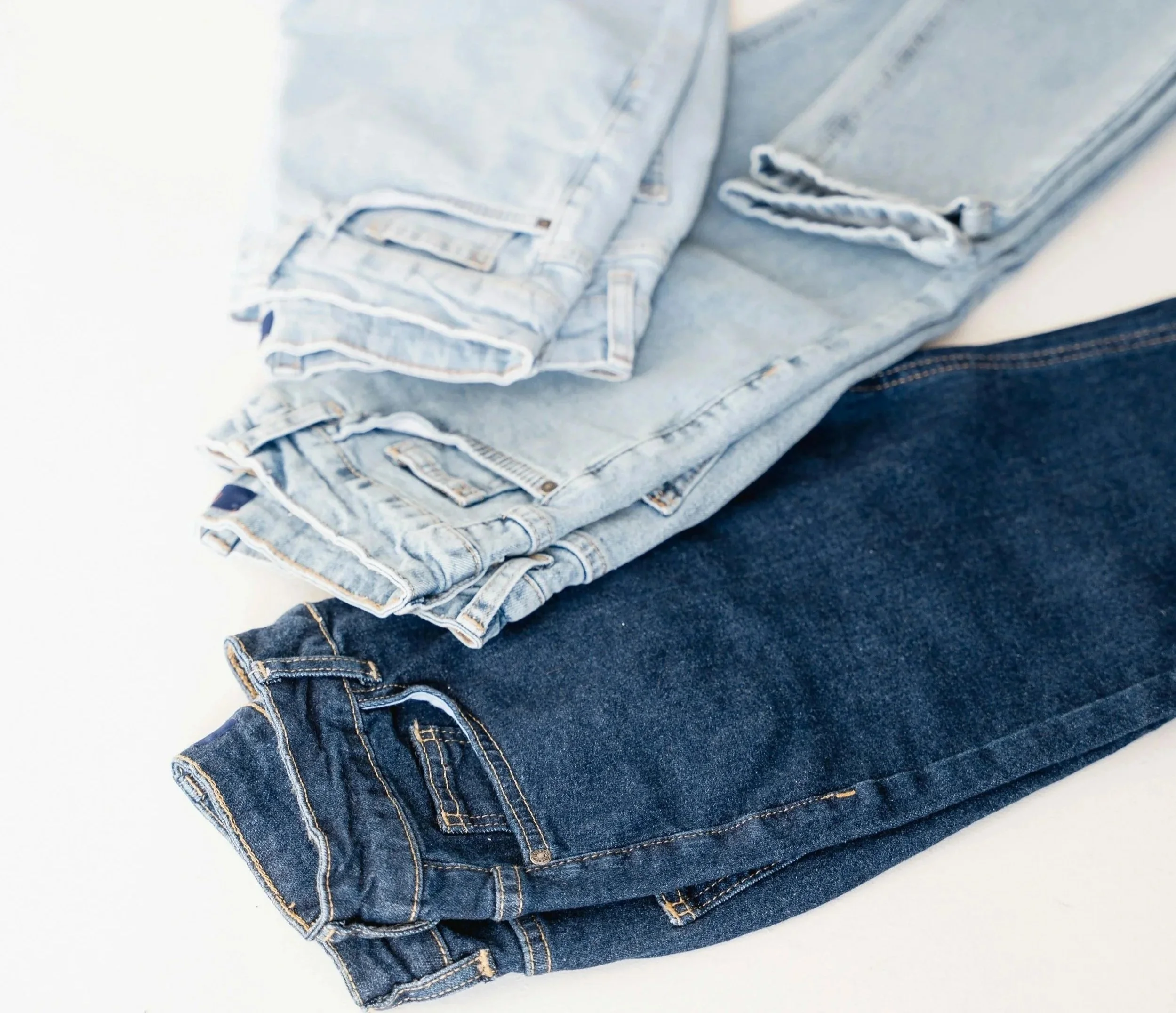
Indigo dyeing defines denim. Due to its ring-dyeing behavior, color remains on the outer layer of the yarn, allowing the fabric to fade and evolve over time.
Rope dyeing creates deeper color layers and more authentic fading, while slasher dyeing is more efficient but results in a more uniform appearance.
For black and colored denim, sulfur dyeing and piece dyeing introduce additional challenges, particularly in terms of color fastness and consistency across production.
Construction Details: Where Engineering Meets Aesthetics
In denim, garment construction is not only functional, it directly influences the final look after washing.
Chain stitching at hems creates the characteristic roping effect, visible after repeated washing cycles. The use of core-spun threads, with a polyester core wrapped in cotton, allows the stitching to fade in harmony with the fabric.
Stitch density also plays a role. A balanced stitch count is required to ensure durability while allowing the garment to react naturally during industrial washing.
These details are often overlooked, but they are essential in achieving an authentic denim look.
Washing Is Where Denim Becomes a Product
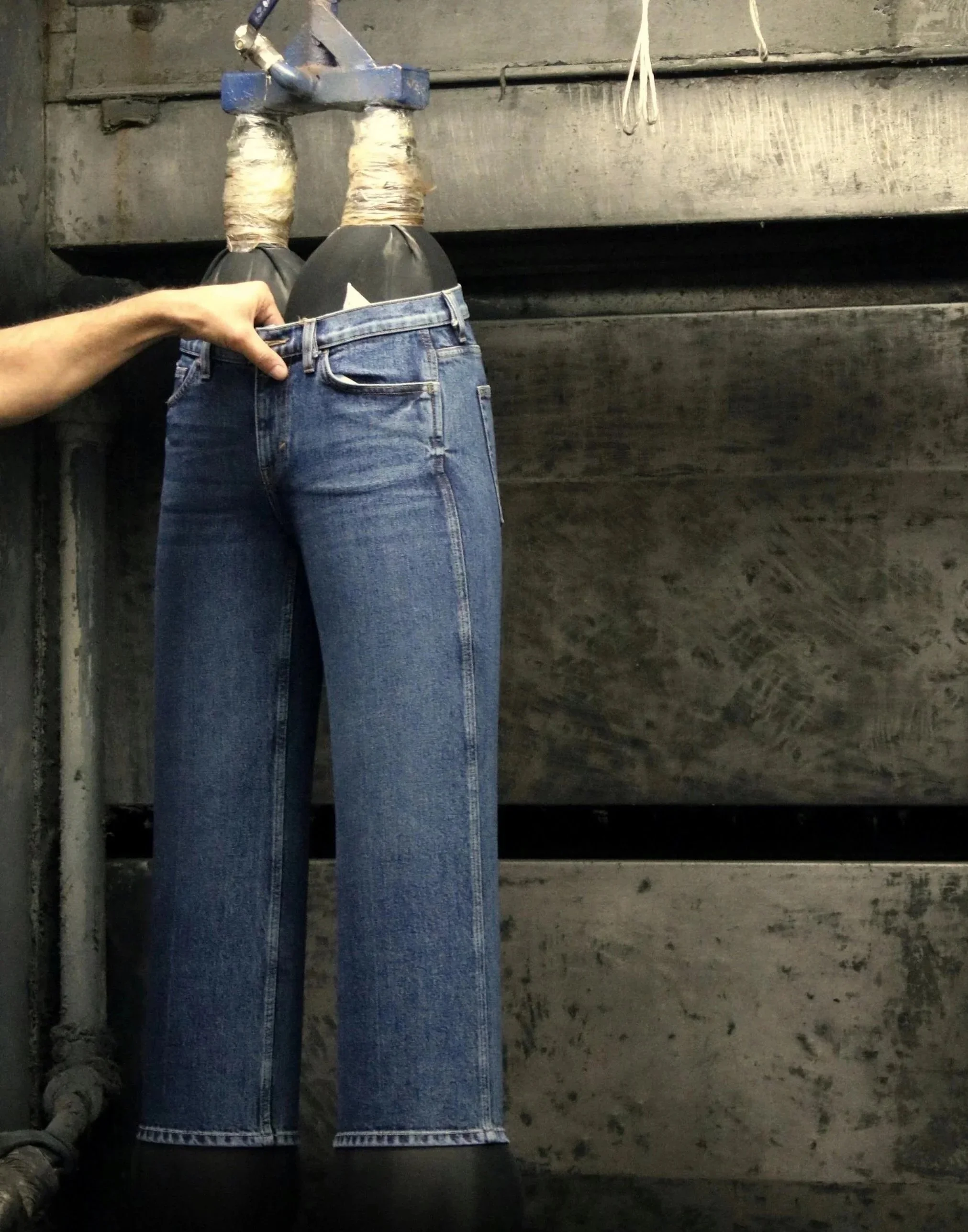
Denim washing is a core development stage where the final identity of the product is created.
Techniques such as enzyme washing, stone washing, PP spray, laser and ozone treatments are combined to achieve specific visual effects and handfeel. Each of these processes directly affects shade, structure and garment stability.
More advanced technologies such as E-flow systems, nano bubble applications and resin treatments allow greater precision while reducing resource consumption.
This stage is also where the highest risk lies. Even small variations in process parameters can lead to noticeable differences between sample and bulk production.
Sustainability in Denim Production
Sustainability in denim is shaped by how materials, processes and technologies are combined.
Material innovations such as organic cotton, recycled fibers and Tencel contribute to reducing environmental impact. However, the most significant improvements are often achieved in washing technologies.
Laser finishing replaces manual abrasion, ozone reduces the need for traditional bleaching agents and E-flow systems enable targeted chemical application with minimal water usage. Nano bubble technologies further reduce water consumption while maintaining process efficiency.
Advanced production setups integrate closed-loop water systems, automated chemical dosing and full traceability across the supply chain.
Chemical management systems such as ZDHC and compliance with REACH ensure safe production standards.
Sustainability is not defined by one technology, but by how consistently these systems are implemented. Leading brands are already pushing these standards forward. Brands like ARMEDANGELS demonstrate that sustainability in denim is not about a single innovation, but about consistently combining better materials, cleaner processes and transparent supply chains.
Denim Trends in 2026

Denim in 2026 is defined by refinement, variation and technical precision rather than extreme shifts.
More structured silhouettes are gaining relevance again, including straighter and more controlled fits, while relaxed shapes remain essential, particularly in streetwear. Both directions exist in parallel and require different fabric and wash approaches.
Wash aesthetics are evolving towards more controlled and intentional finishes. Instead of aggressive distressing, there is a stronger focus on subtle abrasions, sun-faded looks and cleaner surfaces. This increases the importance of precise washing techniques and experienced laundries.
Color development is expanding beyond classic indigo. Softer blues, off-whites and earthy tones such as brown, olive or khaki are gaining traction. These directions require alternative dyeing processes and careful control in production.
Fabric innovation continues through blended constructions, combining cotton with fibers such as Tencel or stretch components to improve comfort and drape. This adds complexity in sourcing, as not all suppliers are equipped to handle these materials consistently.
At the same time, there is a stronger focus on longevity. Products are designed to remain relevant over time, placing greater emphasis on quality, durability and consistent performance.
Why Turkey Plays a Key Role in Denim
Turkey remains one of the most important hubs for denim development and production.
The country combines advanced fabric mills, highly specialized laundries and strong vertical integration. Mills such as ISKO, Orta Anadolu, Bossa, Çalık Denim and Kipaş are globally recognized for their innovation in fabric development and sustainable production.
What sets Turkey apart is the close connection between fabric production and washing expertise. This integrated ecosystem allows faster development, better alignment and more consistent results.
For brands working with complex fabrics, advanced washes or tight timelines, this creates a significant advantage.
Let’s Build Better Denim Together
If you are working on a denim collection and want to improve fabric selection, washing results or supplier alignment, feel free to reach out.
We support brands in navigating the full development process, from fabric sourcing to final production, with a strong network across Turkey and a deep understanding of denim.
Stay tuned for our upcoming Denim Dictionary, an A to Z guide to the terminology, processes and technical details behind denim.